
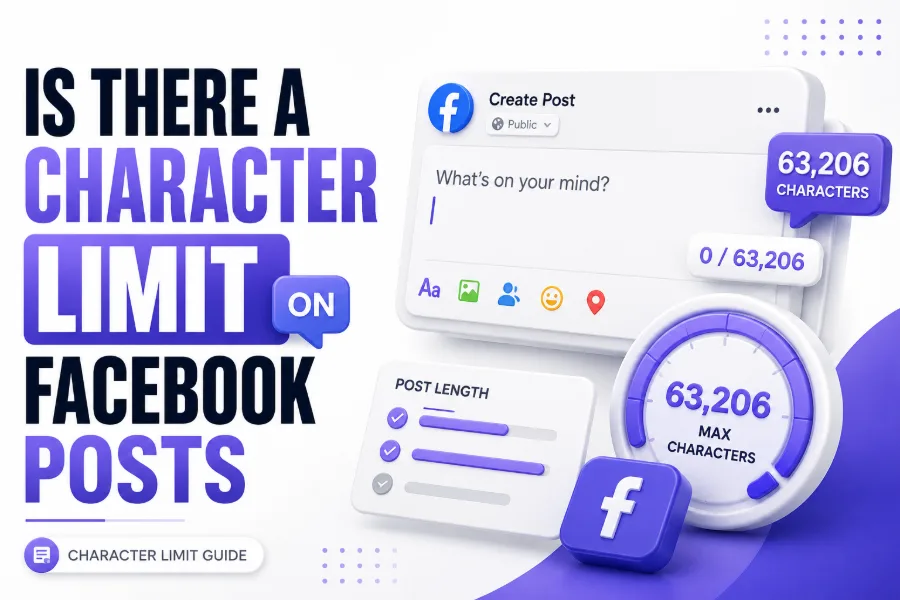
Facebook does have a character limit for regular posts, but it is much larger than most people expect. A standard Facebook status update can be very long, which gives users room for stories, announcements, updates, and detailed community posts.
The commonly cited maximum for a Facebook status update is 63,206 characters. That means Facebook allows far more text than platforms like X, Instagram captions, or short-form social apps. However, using the full limit is rarely the best choice.
A high character limit does not mean every post should be long. Most people scroll quickly, especially on mobile. A clear, short, and useful post often performs better than a long block of text that feels hard to read.
Why Facebook Allows Long Posts
Facebook was built around personal updates, community discussions, groups, pages, photos, videos, and conversations. Because of that, the platform gives users enough space to share detailed thoughts without forcing every update into a tiny format.
Longer limits are useful for creators, business pages, local communities, nonprofit groups, educators, and storytellers. A person can write a personal experience, a brand can publish an announcement, and a group admin can explain rules clearly.
Still, Facebook is not the same as a blog. A post can be long, but it appears inside a fast-moving feed. The opening lines matter most because users decide quickly whether to keep reading or scroll away.
Quick Facebook Character Guide
- Regular Facebook post: commonly cited as up to 63,206 characters
- Facebook comment: often much shorter than a full post
- Facebook ad primary text: shorter copy is usually recommended
- Facebook page description: limited and should stay concise
- Mobile preview: only a small part appears before “See more”
- Best practice: write as long as needed, but as short as possible
The Real Limit Versus the Practical Limit
The real Facebook character limit is the technical maximum allowed by the platform. The practical limit is the amount of text people are likely to read before losing interest or clicking away.
These two limits are very different. A post may technically hold thousands of words, but only the first few lines appear in the feed. If those lines do not create interest, the rest of the post may never be seen.
For most public posts, the practical limit is much shorter than the official maximum. A strong hook, simple message, and clear reason to respond usually matter more than filling the available space.
What Happens When a Facebook Post Is Too Long
When a Facebook post is long, Facebook usually hides part of it behind a “See more” link. This keeps the feed cleaner and prevents large text blocks from taking too much space on the screen.
This does not mean the post is broken. People can still click or tap to read the full content. However, many users will not expand a post unless the first visible lines feel interesting or useful.
That is why the beginning of a Facebook post should carry the main message. If the important point is buried after a long introduction, many readers may miss it completely.
Best Length for Personal Facebook Posts
Personal Facebook posts usually work best when they feel natural and easy to read. A short update, simple story, or thoughtful paragraph can connect better than a long post that tries to explain everything at once.
For friends and family, the right length depends on the purpose. A birthday message may be short. A life update may need a few paragraphs. A personal story may be longer if it is emotional or meaningful.
The best rule is simple: write enough to make the message clear, then remove anything that does not add value. A human post should sound like a real person, not a copied announcement.
Simple Personal Post Structure
| Post Type | Suggested Style |
|---|---|
| Quick update | 1 to 3 short sentences |
| Personal story | 2 to 5 short paragraphs |
| Event memory | Short intro with photo context |
| Opinion post | Clear point with calm explanation |
| Life announcement | Direct message with useful details |
Best Length for Facebook Business Posts
Business posts should usually be shorter and more focused than personal posts. People follow brands for updates, offers, education, trust, and helpful information, not long paragraphs that feel like a sales page.
A good business post often starts with a clear benefit or message. The reader should quickly understand what is being offered, why it matters, and what action they can take next.
Longer business posts can work for case studies, founder stories, product launches, or educational content. Even then, the post should be broken into short paragraphs so it feels easy to scan.
Best Length for Facebook Group Posts
Facebook group posts can be longer because group members often join for deeper discussion. People may read more when the topic is relevant to their problem, interest, hobby, profession, or local community.
For example, a group post about rules, advice, recommendations, or personal experience may need more detail. Members are more likely to read long content when they already care about the subject.
However, group posts still need structure. Use short paragraphs, clear spacing, and direct wording. A long post without breaks can look overwhelming, even when the information is useful.
Facebook Caption Character Limits
Facebook captions for photos and videos can also be long, but short captions usually work well. The visual content already carries part of the message, so the caption should support it instead of repeating everything.
A strong caption explains the context, adds emotion, gives a call to action, or invites comments. It should help the viewer understand why the photo or video matters.
For brand pages, captions should be direct and audience-focused. Instead of writing long promotional text, explain the value clearly and guide users toward one simple next step.
Caption Writing Tips
- Put the main idea in the first sentence.
- Use natural language, not robotic marketing lines.
- Keep paragraphs short on mobile.
- Add a question only when it feels useful.
- Avoid adding too many hashtags.
- Match the caption length to the image or video purpose.
Facebook Comment Character Limits
Facebook comments also have character limits, but comments are usually meant for shorter replies. A comment should be easy to read, relevant to the post, and direct enough for others to follow.
Long comments may be useful in group discussions, customer support replies, or detailed answers. However, a very long comment can feel harder to read than a separate post or private message.
If your comment becomes too long, consider turning it into a post, blog article, message, or document. This makes the content easier to organize and more helpful for readers.
Facebook Ads and Character Limits
Facebook ads follow different writing rules than regular posts. While ads may allow more text in some fields, shorter copy is often recommended because ad placements appear across mobile feeds, stories, reels, and other spaces.
Ad primary text, headlines, and descriptions should be clear quickly. If the message is too long, it may be cut off depending on placement, device, and layout.
For ads, the goal is not to use maximum characters. The goal is to explain the offer, attract the right person, and make the next action obvious with minimal confusion.
Why Short Facebook Posts Often Work Better
Short posts often work better because they respect the way people use Facebook. Most users scroll through the feed quickly, stopping only when something looks useful, emotional, funny, timely, or personally relevant.
A short post can be easier to understand at a glance. When the message is clear, people can react, comment, share, or click without needing to read a long explanation first.
This does not mean long posts are bad. It means the length should match the goal. A quick update should stay short, while a meaningful story can take more space.
Short Post Example
Before:
We are very happy to inform everyone that our new product has finally launched after many months of planning, testing, designing, improving, and preparing for this important release.
After:
Our new product is live today. Built for faster work, cleaner results, and easier daily use.
The second version says the same thing faster and feels easier to read.
When Long Facebook Posts Make Sense
Long Facebook posts can work well when the topic needs emotion, context, proof, or step-by-step explanation. Personal stories, founder journeys, lessons learned, community updates, and detailed advice can perform well in longer formats.
People read long posts when they feel connected to the topic. A long post about a real experience, helpful mistake, or meaningful transformation can keep attention if it is written honestly.
The key is structure. Long Facebook posts should use short paragraphs, strong opening lines, and a clear flow. Without structure, even useful content can feel tiring on a phone screen.
How to Write a Better Long Facebook Post
Start with the most interesting part. Do not spend the first few lines warming up slowly. The visible preview should give people a reason to click “See more” and continue reading.
Use short paragraphs because Facebook is mostly read on mobile. A paragraph that looks normal on desktop may feel too heavy on a small screen. One to three sentences per paragraph is often easier.
End with a simple point, question, or action. A long post should not just stop suddenly. Give readers a clear takeaway, a reason to comment, or a next step that fits the topic.
Character Count and Mobile Preview
Mobile preview matters because many Facebook users read posts on phones. A post may be long, but only a small portion appears before Facebook cuts it with “See more.”
That visible preview decides whether the rest of the post gets attention. If the first lines are vague, readers may not expand it. If they are clear and interesting, more people may continue.
Because of this, the first sentence should not waste space. Avoid slow openings like “I just wanted to come here and say.” Start with the message, result, problem, or story moment.
Strong Opening Examples
- “We tested three post styles, and one clearly performed better.”
- “This is the mistake I made with Facebook captions for years.”
- “Our shop will be closed this Friday for maintenance.”
- “Here is the simplest way to write shorter Facebook posts.”
- “I almost deleted this draft, but the lesson was worth sharing.”
Using a Character Counter Before Posting
A character counter can help you check post length before publishing. This is useful when writing Facebook posts, captions, ads, bios, page descriptions, or social media updates with strict limits.
Writers, marketers, and business owners often draft content outside Facebook first. A counter helps them test length, remove extra words, and make the message cleaner before posting.
You can use a character counter to review Facebook copy quickly. For longer content planning, a word counter can also help shape posts, captions, and blog-style updates.
Common Mistakes With Facebook Post Length
One common mistake is writing every Facebook post like a blog article. Facebook can support long text, but the feed format rewards clarity, speed, and emotional connection more than heavy explanation.
Another mistake is hiding the main point too late. If the reader must click “See more” before understanding the topic, the post may lose attention before it has a chance to work.
A third mistake is using long paragraphs. Even a well-written message can fail if it looks hard to read. Short spacing improves readability and makes the post feel lighter.
Mistakes to Avoid
- Writing long introductions before the main point.
- Using one large block of text.
- Adding too many hashtags or links.
- Repeating the same idea in different words.
- Making every post sound like an advertisement.
- Ignoring how the post looks on mobile.
Facebook Post Length for Engagement
Engagement depends on more than character count. Timing, topic, audience interest, visuals, tone, page trust, and relevance all affect how people react to a Facebook post.
Still, length plays a role. A short post can increase quick reactions, while a longer story can encourage deeper comments. The best length depends on the type of response you want.
If you want quick engagement, keep the post short and direct. If you want thoughtful discussion, give enough context so people can respond with meaningful comments.
Facebook Post Length for SEO and Branding
Facebook posts can support brand visibility, even though they are not the same as website pages. A clear post can help people understand your business, service, values, and personality.
For branding, consistency matters. Your posts should sound like the same brand each time, whether they are short announcements, helpful tips, behind-the-scenes updates, or customer-focused messages.
SEO writers should also remember that social posts can support content distribution. A Facebook post introducing a blog should be short enough to create interest and clear enough to earn clicks.
Practical Formula for Facebook Posts
A simple Facebook post formula can make writing easier. Start with a hook, add useful context, keep the body focused, and finish with a clear action or takeaway.
This formula works for personal posts, business updates, group discussions, and content promotion. It helps prevent rambling and keeps the post connected to one central idea.
The best Facebook posts usually feel natural, not over-polished. Write like a real person with a clear message, then edit the post so it becomes easier to read.
Easy Facebook Post Formula
| Part | Purpose |
|---|---|
| Hook | Gets attention in the first line |
| Context | Explains the reason for the post |
| Main message | Shares the update, story, or value |
| Detail | Adds proof, emotion, or helpful information |
| Ending | Gives a takeaway or next step |
Final Writing Tips for Facebook Posts
Before posting, read the content out loud. If it sounds stiff, too long, or confusing, shorten it. Facebook writing works best when it feels natural and easy to understand.
Check the first two lines carefully. Those lines carry more weight than most of the post because they decide whether someone stops scrolling or continues past your update.
Finally, match the post length to the purpose. A sale announcement does not need a long story. A personal lesson may need more context. A helpful guide should be organized clearly.
Conclusion
Facebook gives users a generous space for writing, but the best post length depends on purpose, audience, and readability. Long posts are allowed, yet shorter posts often work better in a fast-moving feed.
The most important part is not only the maximum number of characters. It is how clearly the message appears, especially in the first few lines before Facebook hides extra text behind “See more.”
So, is there a character limit on facebook posts? Yes, there is, but it is high enough for most users. The smarter goal is to write clear, useful, and readable posts that fit the audience.
FAQ
What is the Facebook post character limit?
A regular Facebook post is commonly listed with a maximum limit of 63,206 characters. That is much longer than most social posts need, so writers should focus more on clarity, readability, and strong opening lines.
Does Facebook cut off long posts?
Yes, Facebook often hides part of a long post behind a “See more” link. The full post remains available, but readers must click or tap to expand it and continue reading the hidden text.
What is the best length for a Facebook post?
The best length depends on the goal. Short updates often work well for quick engagement, while longer posts can work for stories, explanations, or group discussions when the topic is meaningful and well structured.
Can I write a blog-style post on Facebook?
Yes, you can write a blog-style post on Facebook because the character limit is large. However, use short paragraphs, a strong opening, and clear spacing so the post stays readable on mobile devices.
Should I use a character counter for Facebook posts?
Yes, a character counter can help when writing Facebook posts, captions, ads, and descriptions. It is especially useful when you want to shorten long copy, improve readability, or prepare content before publishing.